 |
|||||||
| Building a Studio | |||||||
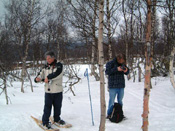
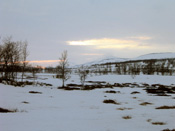
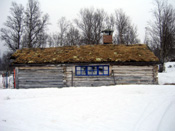
| Site and Conditions: Travel to the site is difficult and time consuming. From Stockholm the drive can take 7 hours, and up to 10 hours in winter. The final 60km is an unpaved road via the village of Flatruet, a Sami settlement and the highest road in Sweden. This road leads to the nearest main settlement to the site, Ljungdalen, which has a store, small ski station and other basic tourist amenities. From Ljungdalen, a forest road is taken for 5km to the road end. In winter a snowmobile or cross-country skis are needed to travel the remaining 1.5km to Tovåsen; in summer it is possible to walk, although there are no defined or marked paths. Walking or skiing takes about 30-40 minutes. The settlement at Tovåsen is composed of 4 cabins and a number of outbuildings. The oldest building dates from the 1780s. It is the smallest stuga and was originally used by cow headers during summer grazing on the mountain pastures. The other buildings have been added since the family bought the land in the 1950s. No new buildings have been constructed however, as all the buildings pre-date their erection at Tovåsen; being built in the traditional Swedish mountain cabin method of inter-locking log construction has allowed them to be transferred to their present location. The land owned by the family is roughly two hectares in area on the north slope of a hill at an altitude of roughly 800m. Much of the surrounding land is a disjointed forest of dwarf birch trees, interspersed with rough moor and marsh land up to the tree line (at an altitude of roughly 900m). From that point moors and pre-tundra conditions dominate. There is a lake 2km to the west, which has many islands, and from Tovåsen a view is possible of Helags, a visually dominant mountain on the Norwegian border. Near Helags’ summit is a glacier, the most southerly in Sweden. There are a few other dwellings near Tovåsen mostly used as summer and winter holiday homes though none are visible from the settlement. The buildings at Tovåsen are without plumbed running water (there is a well situated in the middle of the settlement) or electricity (though some dwellings nearby have installed solar panels) there is a telephone connection that is principally for emergency use. The climate is harsh; winter extends from October to May where heavy snowfalls are to be expected, during the summer there is often fine weather but being a mountain environment sudden storms are common. The plot for the new development must be contiguous with the existing boundary of the settlement, and attention must be paid on how the new building interacts with the existing ones. Moreover if a completely new building is erected (i.e. not an old building transferred to the site) then, due to the wishes of the family, any side viewable from the other buildings must be sensitive to the traditional construction methods. |
     |
||||||
| Workshops | Participants | Background | Site | ||||